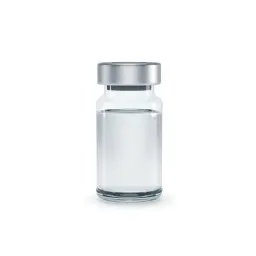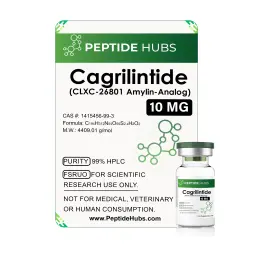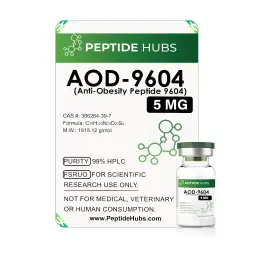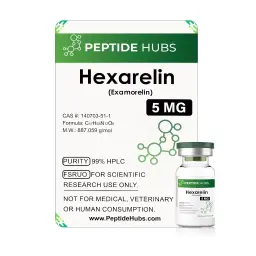


Peptide Hubs presents its premium-grade Survodutide 10 mg, a cutting-edge dual agonist lyophilized powder designed for advanced research into metabolic regulation, sustained weight management, and body recomposition. As a research chemical of significant interest in the fields of endocrinology and performance physiology, Survodutide (also known as BI 456906) represents a sophisticated evolution beyond single-target GLP-1 agonists by simultaneously activating both the glucagon-like peptide-1 (GLP-1) and glucagon receptors. This dual mechanism amplifies its effects on appetite suppression, energy expenditure, and glucose homeostasis, making it a subject of intense study for its potent fat-loss and metabolic health applications. Manufactured under stringent controls in a USA-based facility, each 2 mL vial contains 10 mg of ultra-pure Survodutide, ensuring researchers receive a reliable and consistent compound for their investigative protocols.
Survodutide's profound effects stem from its innovative dual-receptor agonism. Activation of the GLP-1 receptor promotes insulin secretion, inhibits glucagon release, delays gastric emptying, and acts centrally in the brain to enhance satiety signals, leading to a natural and significant reduction in caloric intake. Concurrently, its action on the glucagon receptor increases hepatic energy expenditure and promotes lipolysis, effectively turning the body's metabolism towards utilizing stored fat for fuel. This synergistic "brake and accelerator" model—suppressing appetite while increasing calorie burn—facilitates a powerful deficit conducive to rapid fat loss. Researchers observe not only a decrease in adipose tissue but also improvements in key metabolic markers such as blood glucose levels, liver fat content, and lipid profiles. The potential for preserving lean muscle mass during caloric restriction is a particularly compelling area of study for the athletic and bodybuilding communities, as evidenced in clinical literature on similar agents. For an authoritative overview of GLP-1/glucagon co-agonism, researchers can refer to studies published on the National Institutes of Health (NIH) PubMed database.
As a research peptide, Survodutide requires careful, protocol-specific dosing. It is administered via subcutaneous injection. The lyophilized powder must be reconstituted with sterile bacteriostatic water prior to use. Dosing in preclinical models is typically weight-based and follows a slow escalation pattern to allow the research subject's system to adapt, minimizing potential transient side effects. Common research dosage ranges start from 0.1 mg/kg/week, escalating based on tolerance and research objectives, with many protocols achieving significant effects in the equivalent human range of 0.5 mg to 6.0 mg per week. The long half-life of approximately 165 hours (about 7 days) supports once-weekly dosing schedules, providing stable receptor engagement. Researchers must calculate precise doses based on the reconstituted concentration. It is imperative that all handling, reconstitution, and administration procedures adhere to strict sterile laboratory techniques to maintain compound integrity and subject safety.
A standard investigative cycle for Survodutide's effects on body composition often spans 12 to 24 weeks, given the compound's mechanism supports sustained, gradual fat loss. The cycle typically begins with a 2-4 week titration phase to reach the target maintenance dose, which is then continued for the remainder of the cycle. To comprehensively support physique transformation and recovery goals, researchers often combine Survodutide with other peptides targeting specific pathways. For enhancing metabolic rate and endurance, AICAR is a notable compound. To support crucial tissue repair and gut health during calorie-restricted phases, the renowned healing peptide BPC 157 is frequently incorporated. For deep, restorative sleep and stress modulation which is vital for recovery and hormonal balance, DSIP (Delta Sleep Inducing Peptide) can be a valuable addition. Furthermore, to directly support the healing of tendons, ligaments, and muscle, many protocols include the powerful regenerative agent TB-500. Finally, for researchers focusing on cognitive resilience and neuroprotection during demanding cutting phases, Semax offers a compelling avenue for study. These stacks should be designed with clear, hypothesis-driven endpoints.
In research settings, the side effect profile of Survodutide is generally consistent with other GLP-1 receptor agonists, though potentially amplified due to the glucagon activity. The most commonly observed transient effects are gastrointestinal in nature, including nausea, decreased appetite, diarrhea, or constipation, especially during the initial dose-escalation phase. These typically subside as the subject adapts. As with any compound affecting caloric intake, monitoring for signs of excessive nutrient deficiency is crucial. The glucagon receptor activity necessitates careful observation of blood glucose levels to prevent hypoglycemia, especially in normoglycemic subjects. Injection site reactions are possible but can be minimized with proper technique. There is no evidence of hepatotoxicity, aromatization, androgenic side effects, or significant water retention. In fact, preclinical data suggests a benefit for non-alcoholic steatohepatitis (NASH). All research must include regular monitoring of vital signs, blood panels, and subject well-being. Survodutide is for laboratory research use only and not for human consumption.
Peptide Hubs guarantees that every vial of Survodutide 10 mg is produced under cGMP-like conditions, undergoes rigorous HPLC purity testing (typically >99%), and is verified for accuracy in mass and sequence through mass spectrometry. Our commitment to transparency and quality ensures that researchers receive a benchmark product, allowing them to trust their results and advance the scientific understanding of metabolic peptide therapeutics. By choosing Peptide Hubs, you invest in the integrity of your research.

This product is supplied through the official Peptide Hubs distribution chain and shipped in original manufacturer packaging. The outer shipping package remains discreet, with privacy-focused handling and no unnecessary external product details.
For complete delivery details, tracking policy, and reshipment terms, please see our Shipping Info page.
Store the lyophilized powder at controlled room temperature (15–25°C) in a dry, dark place, away from direct light and moisture. The unopened vial should be kept in its original packaging to maintain stability.
After reconstitution, store the solution at 2–8°C and use within 14 days. Do not freeze. Discard any unused portion after the recommended storage period. Before use, inspect the solution and avoid use if it appears cloudy, discolored, or contains particulate matter, or if the vial or seal is compromised.
Keep out of reach of children. Follow proper handling and sterile injection practices during research use.
Proper storage conditions help maintain product stability and consistent performance across the product's shelf life.
SS-31 is studied for its ability to protect and restore mitochondrial function, improve energy production, and reduce oxidative damage in organ systems.
Yes, studies have shown that SS-31 has a strong safety profile with no major side effects when used correctly in preclinical models.
It is typically administered via subcutaneous or intraperitoneal injection, depending on the design of the research study.
Yes, it is often stacked with BPC-157, GHK-Cu, or CJC-1295 DAC to expand the benefits of mitochondrial repair, tissue regeneration, and aging research.