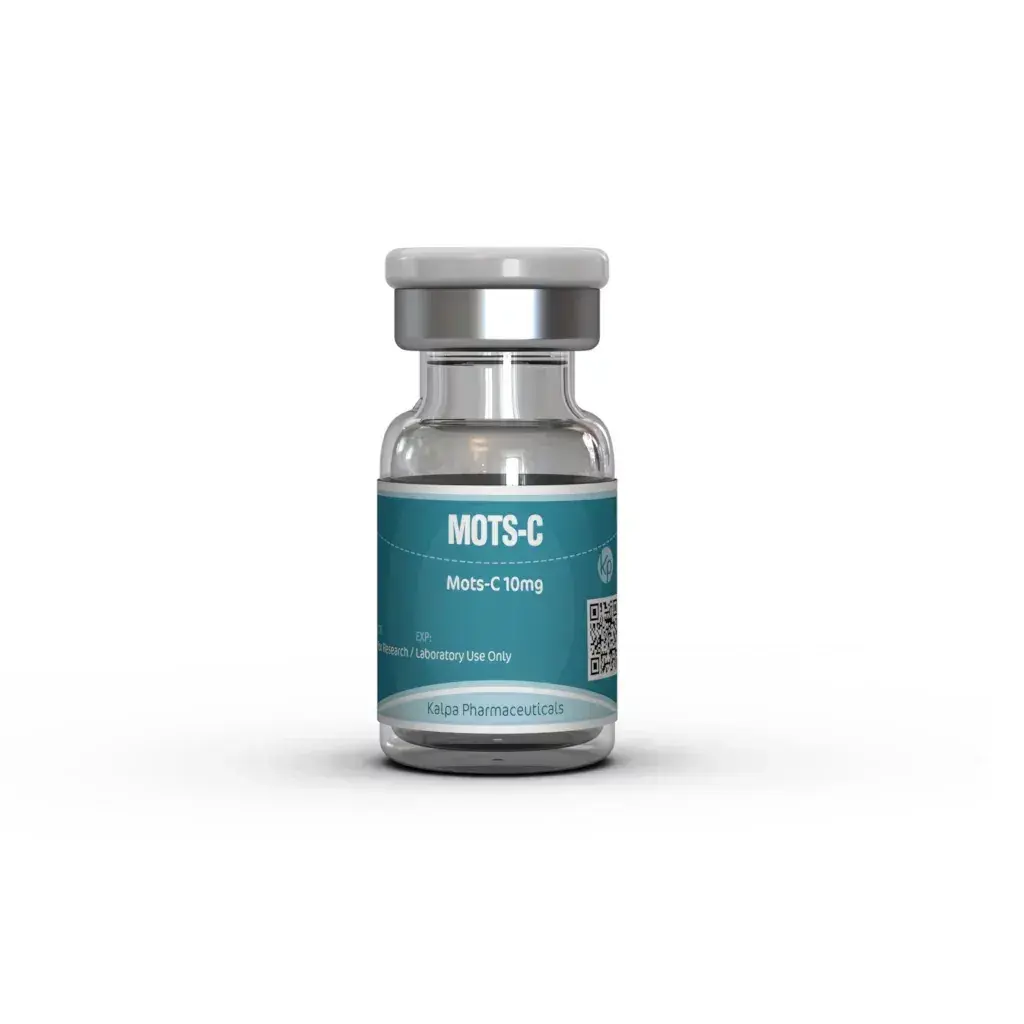
Kalpa Pharmaceuticals MOTS-c 10 mg – Mitochondrial-Derived Peptide
✔ High-purity lyophilized powder ✔ 10 mg per 2 mL vial ✔ Mitochondrial-derived peptide ✔ USA & International shipping
Kalpa Pharmaceuticals MOTS-c 10 mg is a mitochondrial-derived peptide encoded by the mitochondrial genome, distinct from nuclear-encoded peptides. Each 2 mL vial contains 10 mg of lyophilized MOTS-c, ready for reconstitution for research applications involving metabolic regulation, insulin sensitivity, and cellular energy homeostasis.
MOTS-c has gained significant attention in metabolic research due to its ability to influence AMPK activation and improve insulin sensitivity in animal models. Unlike traditional growth hormone peptides or GHRPs, MOTS-c operates through mitochondrial signaling pathways. For researchers studying metabolic function, this peptide represents a unique tool. Explore similar research compounds like Ipamorelin 5 mg or GHK-CU 50 mg.
What Makes Kalpa Pharmaceuticals MOTS-c Unique?
MOTS-c is one of the few known peptides encoded by mitochondrial DNA (mtDNA) rather than nuclear DNA. It translocates to the nucleus under metabolic stress conditions, influencing gene expression related to metabolism and inflammation. This distinct origin and mechanism sets it apart from synthetic peptides or hormone analogs.
For performance-focused research, MOTS-c is often studied in the context of metabolic adaptation and energy expenditure. The 10 mg dosage provides sufficient material for extended protocols investigating chronic metabolic interventions. Researchers may also combine MOTS-c with other metabolic research tools to evaluate comprehensive pathway interactions.
Benefits of Kalpa Pharmaceuticals MOTS-c for Research
- ✔ Mitochondrial-encoded peptide for unique signaling research
- ✔ AMPK pathway activator in animal models
- ✔ 10 mg lyophilized powder for robust research protocols
- ✔ Suitable for subcutaneous administration research
- ✔ Relevant for metabolic and insulin sensitivity studies
Research Grade
Kalpa Pharmaceuticals MOTS-c 10 mg is intended for laboratory research only. Not for human consumption or clinical use.
External research on MOTS-c's mechanisms can be explored via PubMed for peer-reviewed studies.
Technical Details
Peptide Type
Mitochondrial-Derived Peptide
Peptide Sequence
MRWQEMGYIFYPRKLR
Peptide Length
16 Amino-Acid Residues
Terminal Form
H-MRWQEMGYIFYPRKLR-OH
Molecular Formula
C₁₀₁H₁₅₂N₂₈O₂₂S₂
Molecular Weight
2174.6 g/mol
Genetic Origin
Mitochondrial 12S rRNA Region
Research Pathway
AMPK-Associated Metabolic Signaling
Dosage & Usage Guidelines for Research
For laboratory research use only. Not for human consumption. Reconstitution and handling must be performed by qualified personnel using sterile techniques.
Reconstitution Protocol
- ✔ Add 2-5 mL bacteriostatic water to the 10 mg vial
- ✔ Swirl gently; do not shake
- ✔ Store reconstituted peptide at 2-8°C and use within 30 days
The standard reconstitution yields a concentration of approximately 2-5 mg/mL depending on the volume used. For precise dosing, researchers should calculate based on desired mg per injection volume.
Typical Research Parameters
In animal models, MOTS-c is often administered at dosages ranging from 5-10 mg per week, typically divided into 2-3 injections. Subcutaneous injection is the standard route for systemic metabolic research. Due to its short half-life, frequent administration may be required for sustained pathway activation studies.
- ✔ Subcutaneous injection: 0.5-1 mg per injection, 5-10 mg total weekly
- ✔ Research models: Dosing typically scaled by body weight
- ✔ Study duration: 2-6 weeks for metabolic adaptation studies
Combination Research
MOTS-c is often studied in isolation due to its unique mitochondrial signaling pathway. However, some protocols combine it with other metabolic modulators to evaluate synergistic effects on energy homeostasis. For comprehensive metabolic research, explore our range of research peptides.
Note: Dosages mentioned are for research purposes only. Individual response varies in animal models. Always follow institutional animal care guidelines when conducting in vivo research.
What to Avoid During Research
- ❌ Do not use if the lyophilized cake appears discolored or collapsed
- ❌ Avoid exposure to high heat or direct light
- ❌ Do not mix with strong solvents or extreme pH solutions
- ❌ Avoid repeated freeze-thaw cycles after reconstitution
Shipping & Product Authenticity
USA Domestic
4-5 business days
International
13-15 business days
Order Processing
24-48 business hours
Tracking
Tracking number provided
Direct Supply & Discreet Delivery
This product is supplied through the official Kalpa Pharmaceuticals distribution chain and shipped in original manufacturer packaging. The outer shipping package remains discreet, with privacy-focused handling and no unnecessary external product details.
What to Expect
- ✔ Orders are processed after payment confirmation
- ✔ USA Domestic shipping is typically faster when local stock is selected
- ✔ International orders include tracking, though update frequency may vary by destination
- ✔ Multiple warehouses may result in separate shipments when applicable
Authenticity support: official Kalpa Pharmaceuticals presentation, batch-linked documentation, and original packaging help reinforce product legitimacy and buyer confidence.
Verified Supply
For complete delivery details, tracking policy, and reshipment terms, please see our Shipping Info page.
Storage Guidelines for Lyophilized Peptides
Store Kalpa Pharmaceuticals MOTS-c 10 mg lyophilized powder in a cool, dry place away from direct light and moisture. Prior to reconstitution, the unopened vial should be kept at controlled room temperature (15-25°C) or refrigerated (2-8°C) for long-term storage. Do not freeze the lyophilized powder, as this may damage the peptide structure.
After reconstitution with bacteriostatic water, the solution must be stored at 2-8°C (refrigerator) and used within 30 days to maintain peptide integrity. Avoid repeated freeze-thaw cycles. Do not use if the solution appears cloudy or contains particulates, or if the vial seal is compromised.
Keep out of reach of children and unauthorized personnel. Follow standard laboratory safety protocols when handling peptides.
Proper storage conditions help maintain research-grade purity and consistent performance across the product's shelf life.
Frequently Asked Questions
What is Kalpa Pharmaceuticals MOTS-c 10 mg used for in research?
MOTS-c is studied for its role in metabolic regulation, insulin sensitivity, AMPK activation, and cellular energy homeostasis. It is a mitochondrial-derived peptide with unique signaling properties.
How is Kalpa Pharmaceuticals MOTS-c typically reconstituted?
Add 2-5 mL of bacteriostatic water to the 10 mg vial, swirling gently until fully dissolved. The resulting concentration will be approximately 2-5 mg/mL depending on the volume used.
What is the typical research dosage for MOTS-c?
In animal studies, dosages often range from 5-10 mg per week, typically divided into 2-3 subcutaneous injections. Dosing should be scaled appropriately for the research model and study objectives.
How is MOTS-c different from other peptides?
MOTS-c is encoded by mitochondrial DNA rather than nuclear DNA, making it distinct from most research peptides. It influences metabolic pathways through AMPK activation rather than growth hormone release pathways.
Is Kalpa Pharmaceuticals MOTS-c tested for purity?
Third-party COA testing is currently pending. Kalpa Pharmaceuticals is committed to publishing batch-specific lab reports as soon as analytical testing is completed and verified.
No reviews found
Please log in to write MOTS-c 10 mg review.